The Blind Student Who Asked Me to Teach Him Image Processing

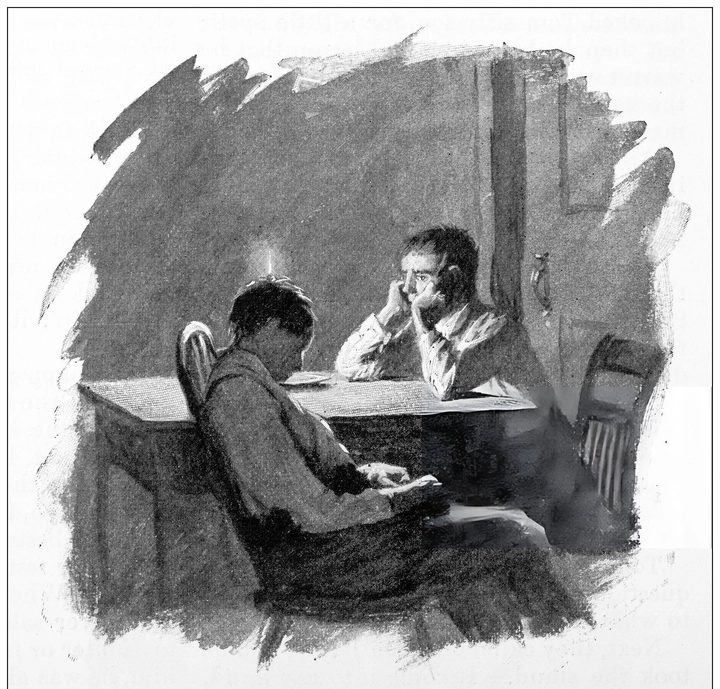
Some experiences are strange in the best possible way — the kind that make you stop mid-sentence and think about what you are actually doing. Teaching a blind student image processing was one of them. But to call him simply “a blind student” would be to miss almost everything about who he was.
His Story
By 28, he had done what most people spend a lifetime trying to do. He was a top engineer, married, and had climbed to the head of a multinational company. By any measure, he had made it.
Then he lost his sight.
I do not know the full details of how it happened, and it is not my story to tell. But the weight of that fact settled over every session we had together. This was not someone who had adapted to blindness from childhood, who had built their entire mental model of the world without vision. He had seen things. He had read engineering diagrams, watched displays, navigated the world with his eyes for nearly three decades — and then one day, all of that was gone.
And yet, here he was. A master’s student. Still going.
I think about that a lot. Most people, faced with losing their sight at the height of their career, with a family, with everything already built — most people would be forgiven for stopping. For deciding that enough had already been asked of them. He did not stop. He enrolled in a master’s program and then somehow ended up needing someone to teach him image processing.
That is the kind of person he was before I even met him.
How It Started
I stumbled upon him by chance. He needed someone to walk him through a course on image processing, and I said yes before I had fully thought through what that meant. Image processing — a field built entirely on the premise that you can see the image. Pixels, gradients, edges, histograms, color spaces. All of it grounded in visual intuition that most of us take for granted without ever questioning it.
He had seen all of that once. And now he couldn’t.
The First Session
The first session was where the strangeness of the situation really hit me. I sat down to explain what an image is — a 2D grid of numbers, each number representing a brightness value — and I realized I had always explained this by pointing at things. “Look at this pixel here.” “See how the edge shows up.” “Notice the difference in intensity.”
None of that worked. Not a single sentence of it.
So I had to rebuild how I explained almost everything from the ground up. An image became a map. Pixel intensity became a surface — high values are peaks, low values are valleys. Edge detection became finding the steepest slopes on that surface. Blurring became smoothing out the terrain. Every concept needed a new metaphor, and every metaphor had to be spatial or tactile rather than visual.
But here is what I had not anticipated: he already had an engineer’s intuition for all of it. He had spent years thinking in systems, in signals, in data. The mathematics of image processing was not foreign territory — it was just a domain he had never applied that thinking to. Once the concepts were framed the right way, he moved through them with a precision that surprised me. He had no visual output to glance at and say “yeah, that looks about right.” He had to reason through everything, which meant he actually understood it.
What I Learned
Teaching him taught me something I had not expected: I did not actually understand image processing as well as I thought I did.
When you explain something visually, you can get away with a lot of hand-waving. You point at a Gaussian blur result and say “see how it’s smoother?” and the student nods because they can see it. That nod does a lot of heavy lifting. It covers gaps in the explanation. It substitutes for actual understanding on both sides.
None of that was available to me here. Every step had to be airtight. Every concept had to be self-contained and logically consistent without leaning on “just look at it.” It was the most precise I had ever been forced to be as someone explaining technical material.
There was also something quietly uncomfortable about the whole setup that I sat with for a while — a field named image processing, being taught to someone who had lost the ability to see images. But that discomfort, I came to realize, was more about my own assumptions than about anything real. Because the math does not care whether you can see. The convolution operation is the same whether you visualize it or reason through it algebraically. He was doing the actual thing, just through a different door. And frankly, the more rigorous door.
The Weirdness Never Fully Left
I will be honest — the experience stayed strange throughout. There were moments where I caught myself mid-explanation, starting to say something like “imagine you’re looking at…” and having to stop and rethink entirely. The instinct to anchor everything in vision is deeply baked in, at least for me.
But sitting across from someone who had lost their sight at the peak of their life and was still pushing forward — still learning, still building — made my small discomfort feel very small indeed. He was not looking for sympathy. He was looking for the material, explained clearly, so he could pass the course and keep moving.
I think about him often, whenever I sit down to explain something I think I know well. Because sometimes the most clarifying thing is having to explain it to someone who will not let you cheat. And sometimes the most humbling thing is realizing the person in front of you has already overcome something you could not imagine, and is simply waiting for you to keep up.